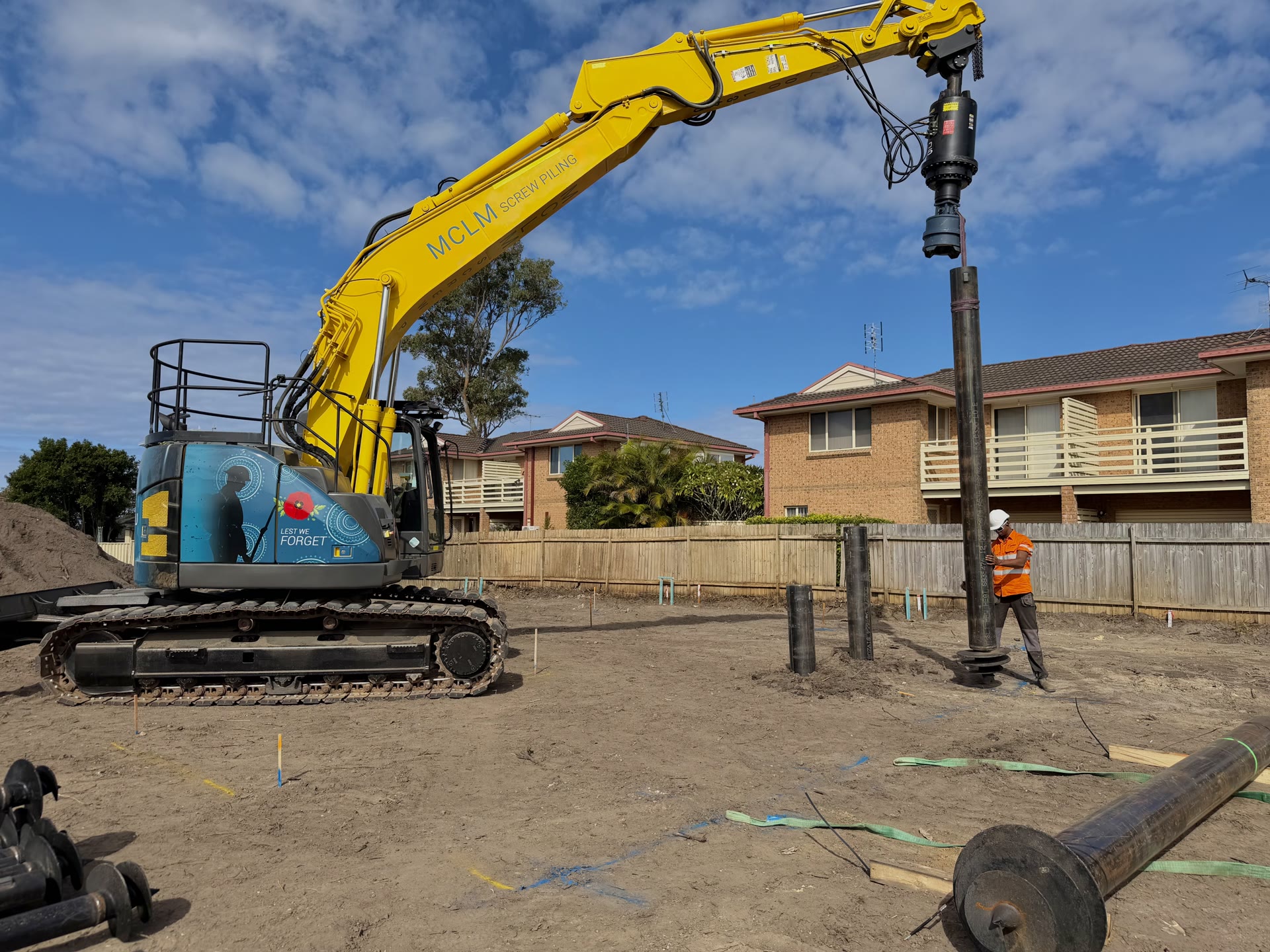
Stage 01
Mechanically rotated
A hydraulic drive head rotates the screw pile into the ground.
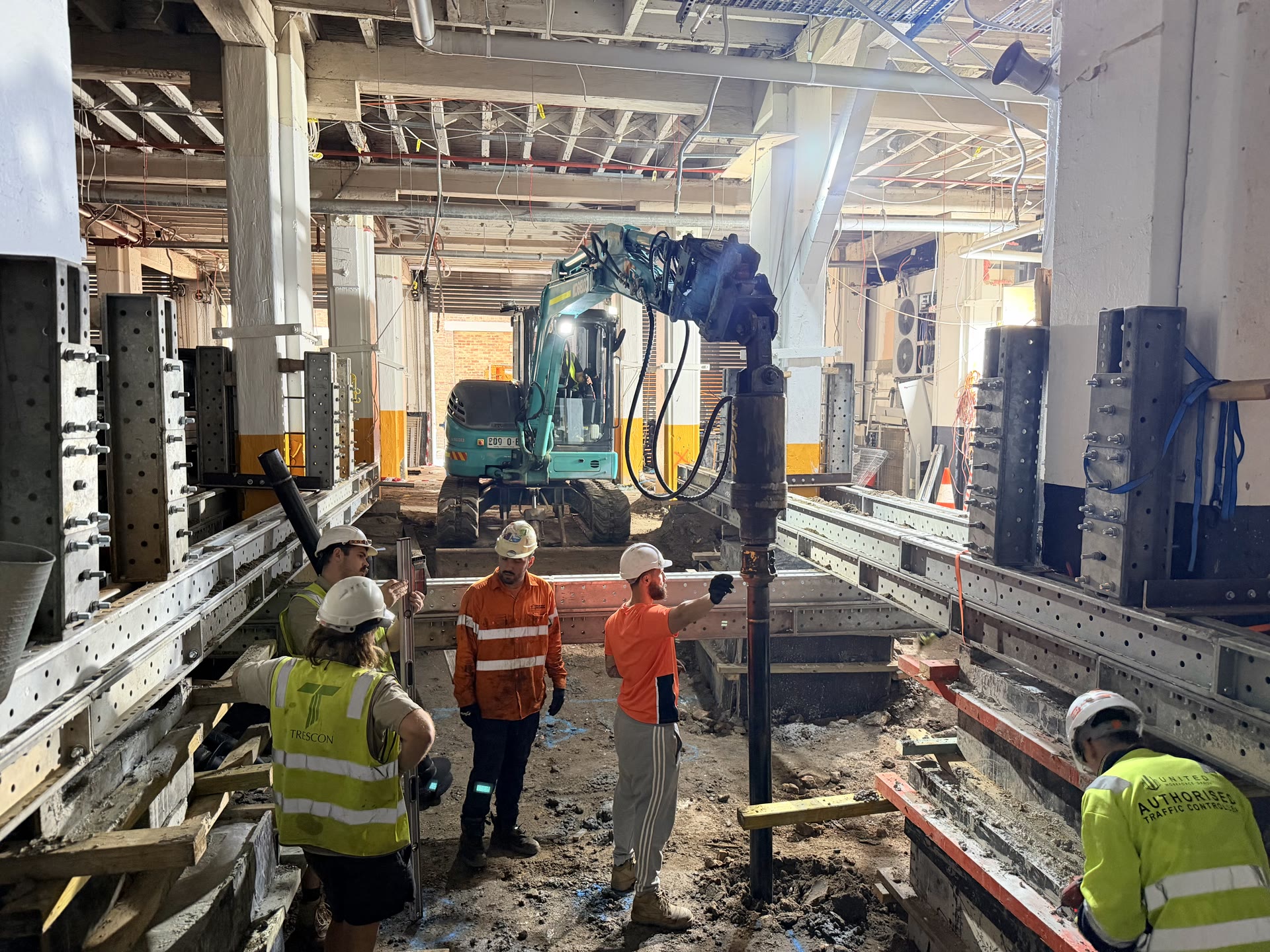
On-site installation
Installed quickly, cleanly and with minimal disruption. No excavation, no curing time and no heavy concrete machinery.
Hydraulic installation
Rotate. Advance. Load.
Sequence / 01–03
Ground conditions
A fast installation method suited to sites where access, soil or surrounding ground makes traditional foundations difficult.
Cyclone prone areas
Use between in-ground existing services in tight building sites
Sensitive tree root systems
Contaminated soil
Water charged ground
Soft soil locations (coastal locations and former swamp areas)
Filled public spaces (ovals and playing fields)
Remote locations & temporary buildings
Installation method
Stage 01
A hydraulic drive head rotates the screw pile into the ground.
Stage 02
As the pile advances, the helical flights draw it downward with minimal soil disturbance.
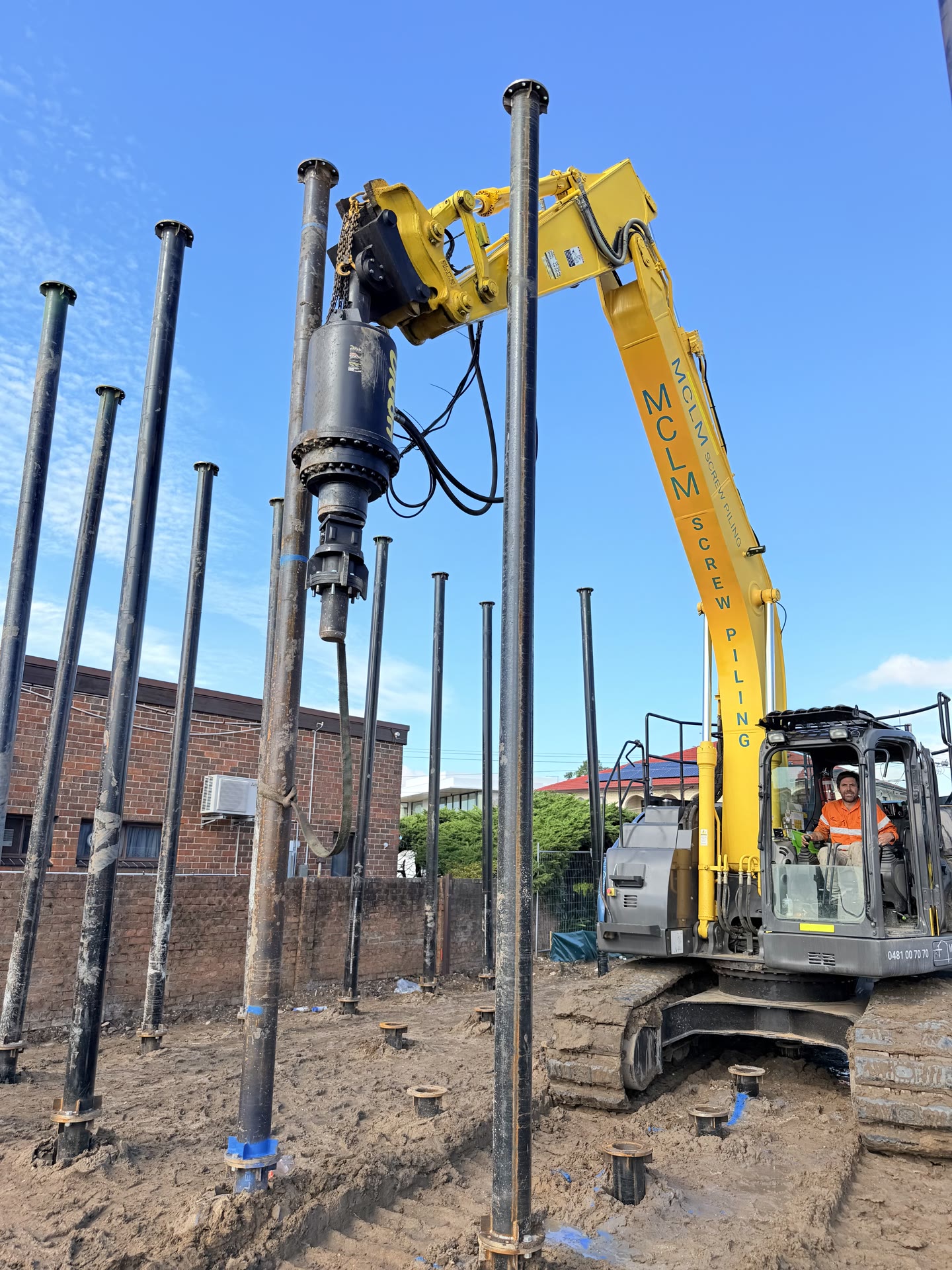
Stage 03
Once at the required depth, the pile is ready to load immediately.
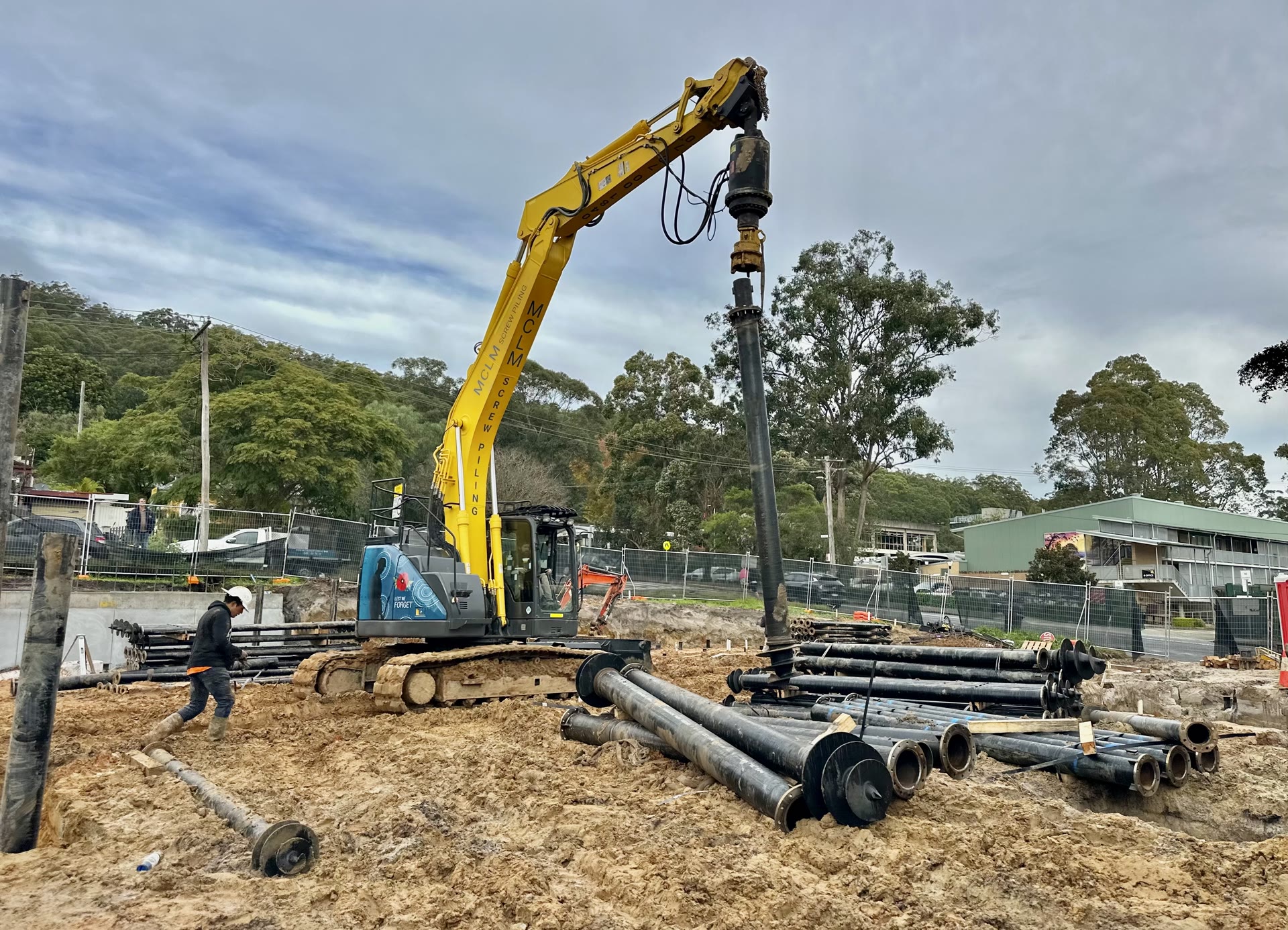
Installation advantage
Installation FAQ
Six common questions about timing, approvals, site impact and permanent use.
Most screw piles can be installed in minutes per pile. A typical residential project can be completed in a single day, compared to several days for traditional concrete footings.
Requirements vary by location and project type. We recommend checking with your local council, but in many cases screw piles fall within standard building regulations. Our team can advise based on your specific project.
Yes — one of the key advantages of screw piles is that they can be extracted and reused. This makes them ideal for temporary structures, hire buildings, and projects where future site changes are anticipated.
Screw pile installation causes minimal ground disturbance. There is no excavation and no spoil to remove, so lawns, gardens, and nearby services are left largely undisturbed.
Screw piles perform well in a wide range of conditions including soft soils, waterlogged ground, coastal and swamp areas, contaminated soil, and sites with sensitive tree root systems.
Absolutely. Screw piles are engineered to meet the load requirements of permanent residential, commercial, and industrial structures. Each installation is designed to suit the specific soil conditions and structural loads of your project.